Fun and Engaging Violin Lessons for Kids.
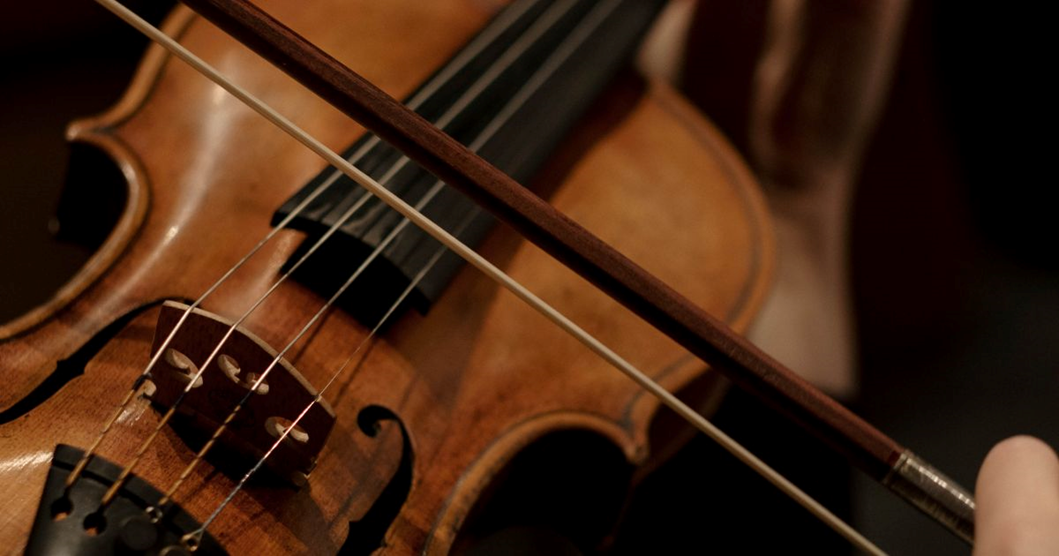
Discover fun and engaging violin lessons for kids to build skills and confidence through music.
Children who like to learn the violin like to be engaged, challenged, and even a little distracted. Parents also like their children to be engaged, challenged, but not distracted.
Good thing both parties can learn the violin and have their cake and eat it too! When a parent or music teacher implements fun practice ideas, both the student and the mentor come out as winners.
At the LVL Music Academy to ensure a refreshing learning experience, violin instructors can employ various game plans.
Let’s talk about what these fun and engaging violin lessons for kids are.
Understanding Violin Lessons for Kids
Violin lessons for kids are a medium of introducing them to the world of music through an instrument that is stringed and played with a bow called the violin, often using the Suzuki method.
These lessons do not just teach them how to play the string instruments but also teach them how to be confident, disciplined, and express themselves emotionally.
It also helps foster their cognitive development from a very young age as a little violinist.
Key Readiness Areas for Violin Lessons
These key readiness areas are:
Physical Skills Needed
Children need specific physical abilities to play music effectively on the violin:
- Fine Motor Skills.
Signs your child has sufficiently developed fine motor skills:
- Ability to hold small objects like pencils/crayons correctly.
- Can complete self-care tasks like buttoning clothes.
- Demonstrates precision cutting of paper or tracing of lines.
If your child remains clumsy and drops items often, he or she may not have adequate abilities yet.
Parents can nurture fine motor skill development through daily activities:
- Play-Doh: molding figures strengthens hands.
- Lego building, grasping tiny pieces, fosters dexterity.
- Arts and crafts: holding crayons/markers/scissors helps coordination.
- Buttoning, zipping, tying: practicing dressing develops muscles.
2. Strength and endurance are crucial for beginner violin players.
Playing the violin demands that your child has enough arm and hand strength and stamina to:
- Comfortably hold up instrument between the shoulder and chin for extended times.
- Firmly grasp the violin bow to control movement across strings.
- Hold fingers down with enough pressure to produce clear notes.
Violin lessons and practice can be physically tiring. They need to maintain proper form for 30 minutes or more.
3. Building Endurance.
- Hands and Fingers: Play hand games like Cat’s Cradle to flex fingers independently.
- Arms: challenge them to hold out their arms straight for increasing lengths of time.
4. Hand-Eye Coordination.
Improving hand-eye coordination through violin helps in many areas!
Signs your child has developed this skill include:
- Ability to catch, kick, or throw balls well for their age.
- Can complete simple puzzles or build blocks/Lego structures.
- Draws recognizable pictures representing people, objects, animals.
If your child can’t tie shoes yet, he or she might not be ready for violin. Cutting along lines and holding utensils correctly are also important skills.
Parents can boost hand-eye coordination through fun games and activities:
- Ball games: catching, throwing, kicking-all hone these abilities.
- Tracing shapes and letters: controlling pencils, trains, hands and eyes to align.
- Lacing cards or sewing: weaving string through holes builds focused precision.
- Cup stacking: arranging cups-quickens reaction time between hands and eyes.
Cognitive and Social Skills
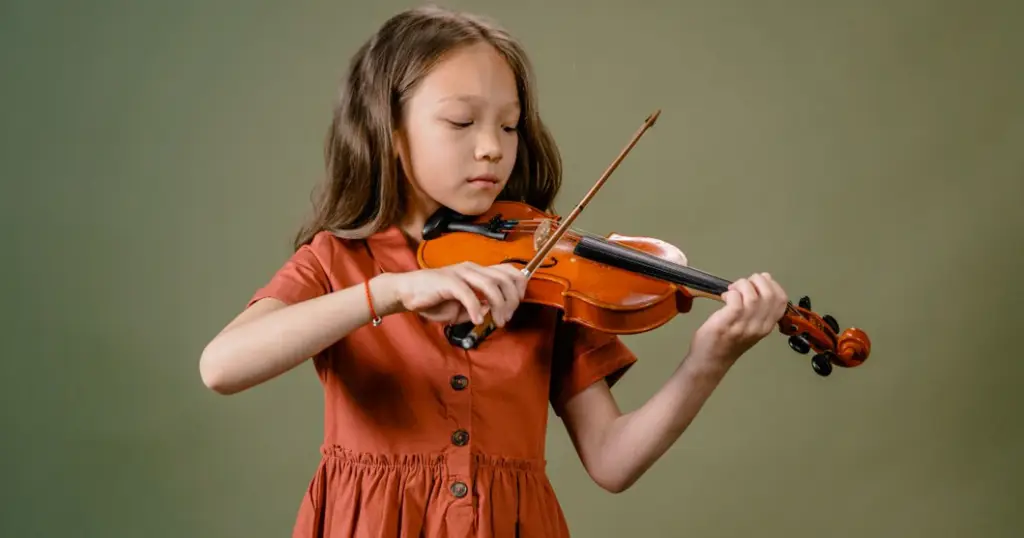
Your child needs more than just physical skills to succeed in violin lessons.
They also need mental and emotional skills to succeed in music lessons. These abilities help them focus and stay motivated.
So, support their growth in these areas!
- Attention Span.
This helps them fully apply themselves and improve. Consider whether your child has shown sustained attention for comparable activities like:
- Listening attentively to chapter books read aloud.
- Concentrating sufficiently to complete worksheets or crafts.
- Paying attention long enough to follow a TV show storyline.
Fidgety children who quickly switch between toys or games may not be ready for lessons.
Parents can stretch young children’s attention incrementally:
- Read engaging picture books and have them retell the story.
- Complete jigsaw puzzles together, adding pieces as focus improves.
- Assign chore chart stickers for concentrating on single tasks.
- Limit screen time and provide activities requiring sustained focus.
2. Following directions is essential for a successful experience with a violin teacher.
Mastering the violin takes persistence, especially through frustration.
Ask yourself if your child:
- Listens well when given multi-step directions.
- Exhibits patience in trying new activities even if challenging.
- Practice self-discipline to complete homework before playtime.
Impulsive children who rush through instructions may struggle with violin lessons.
Parents can boost listening abilities using everyday situations:
- Provide multi-step directions for getting dressed or cleaning up.
- Assign household responsibilities with the checklist for sequence.
- They followed the recipes step-by-step to prepare snacks.
- Play Simon Says, asking them to listen and then perform actions.
Maturity Level
Violins are delicate and expensive, so they need careful handling during music lessons.
Don’t expect perfect care right away when learning the violin, though. Young children might accidentally drop their violins as they get used to them.
This is especially true for 4-5-year-olds just starting lessons. If your child understands and agrees to follow care rules, they can start learning the violin.
Fun Games That Can Keep Kids Active During Violin Lessons
Examples of sure games that can keep them active are:
Simon Says
To help with ear training, play this new rendition of the old-school game “Simon Says.” Taking on the role of “Simon,” start by issuing instructions to the student(s).
For example, when you play A on the violin, the kids must stand up. Or when you play E, the kids must sit down.
Spot the Mistake
Start by showing students the proper bow hold, then ask them to close their eyes while you set up your bow hold with one obvious mistake:
For example, a straight thumb. Once you’re ready, ask students to open their eyes and spot the mistake. They get three chances to guess the mistake before moving on.
Tree Trunk
To practice the proper violin posture, have the child pretend he or she is a tree in the middle of a tornado while holding the violin.
If the student’s feet are placed too narrowly, then the wind will push him or her over sideways. If his or her feet are placed too wide apart, then the wind can pull him or her forward or backwards.
Children can get easily burned out when trying to master a complex instrument such as the violin. To help keep them motivated, mix up their practice routine with these fun, educational games.
Advantages of Starting Young
Introducing the violin early when your child is eager to learn new things has many benefits:
- Their brains continue rapid development, priming them to absorb new information.
- They can progress quickly by taking advantage of this critical learning period.
- Early exposure allows more time to foster advanced techniques.
- Performing at recitals helps build confidence.
Conclusion
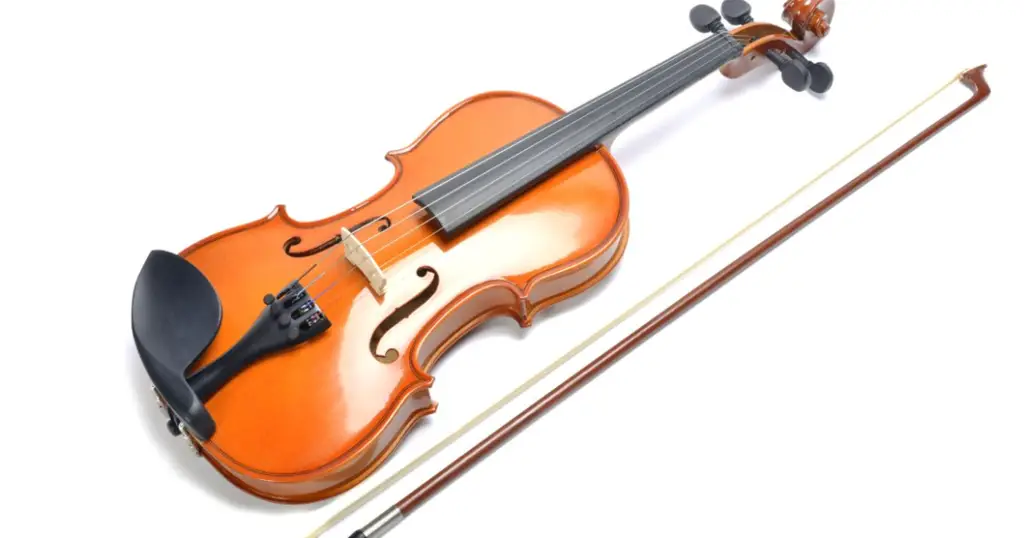
Violin lessons offer many cognitive benefits for children. They help with reading, memory, focus, and listening skills. Learning the violin boosts overall brain development.
Starting lessons at the right age with excellent support is important. Parents can help their kids enjoy music and gain these benefits.
Every child is unique, so his or her readiness for violin lessons differs. Use this guide to check if your child is physically, mentally, and emotionally ready.
Talk to violin teachers for personalized advice. Keep lessons fun and celebrate progress.