Health

Are air conditioners toxic? Learn the real health risks, mold concerns, refrigerant safety, and how to keep your AC safe and clean.

If you’ve ever sat under your AC and thought, “Is this air actually safe?” you’re not overthinking it.

As an experienced air conditioning contractor will tell you, most air conditioners are safe when installed and maintained properly.

But, as with many things in your home, problems can start when maintenance is ignored.

Let’s answer the big question clearly: are air conditioners toxic?

In most homes, no. Air conditioners are not toxic on their own. But certain issues, like mold, dirty filters, or refrigerant leaks, can affect your indoor air quality.

And that’s where you need to pay attention.

How Air Conditioners Actually Work

Before we talk about risks, it helps to understand what your AC does.

An air conditioner:

  • Pulls warm air from inside your home
  • Cools it using refrigerant
  • Pushes the cooled air back inside
  • Removes moisture from the air

That last point is important. When your AC works properly, it reduces humidity. And lower humidity helps prevent mold growth.

So in many cases, your AC actually improves indoor air quality instead of harming it.

When Can Air Conditioners Become a Problem?
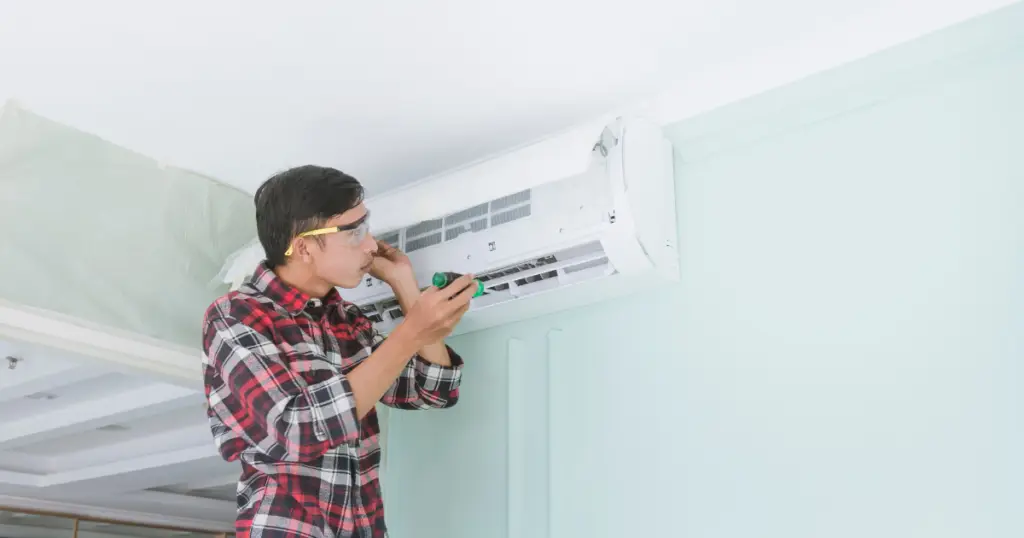
Are air conditioners toxic

Air conditioners themselves are not toxic machines. Problems usually come from poor maintenance.

Here are the main concerns.

1. Mold and Bacteria Growth

This is the biggest issue people worry about.

If your system:

  • Has clogged drain lines
  • Has dirty filters
  • Has moisture sitting in the unit

It can create the right conditions for mold growth.

According to the Environmental Protection Agency (EPA), mold can grow anywhere there is moisture and organic material.

If mold builds up inside your AC system, it can spread spores into your home through the vents.

Common symptoms of mold exposure include:

  • Coughing
  • Sneezing
  • Runny nose
  • Headaches
  • Worsening asthma

If you notice a musty smell when the AC turns on, that’s a sign to inspect it.

2. Dirty Air Filters

This one is simple but often ignored.

When you don’t change your air filter:

  • Dust builds up
  • Pet dander circulates
  • Pollen spreads
  • Airflow decreases

Instead of cleaning your air, the system starts pushing dirty air around.

The Centers for Disease Control and Prevention (CDC) highlights the importance of clean air and proper ventilation in reducing airborne irritants.

Replacing your filter every 1–3 months is one of the easiest ways to prevent AC-related health problems.

3. Refrigerant Leaks

Refrigerant is the chemical that cools the air inside your system.

Modern systems use refrigerants like R-410A. These are not meant to be inhaled in large amounts. If there is a leak, exposure in high concentrations could cause:

  • Dizziness
  • Headaches
  • Breathing problems

The good news? Refrigerant leaks are rare in well-maintained systems.

The U.S. Environmental Protection Agency explains refrigerant safety standards under the Clean Air Act.

If you ever hear hissing sounds from your unit or notice reduced cooling, call a professional right away.

4. Poor Ventilation

Sometimes the issue isn’t toxicity. It’s stale air.

If your home is tightly sealed and your AC runs constantly without fresh air exchange, indoor air can become trapped.

That may increase:

  • Carbon dioxide levels
  • Indoor pollutants
  • Lingering odors

Air conditioning systems cool air, but they don’t always bring in fresh air unless designed to do so.

This is why proper ventilation matters just as much as cooling.

Are Window Units More Dangerous?

People often ask if window AC units are more toxic than central air systems.

Not necessarily.

The risks are similar:

  • Mold buildup
  • Dirty filters
  • Poor cleaning

Window units may actually need more frequent cleaning because they are exposed to outdoor debris.

If you see visible mold inside a window unit, it’s better to clean or replace it rather than keep using it.

Can Air Conditioning Make You Sick?

You might have heard the term “air conditioning sickness.”

It’s not a medical diagnosis, but some people feel unwell after sitting in cold, dry air for long periods.

Common complaints include:

  • Dry throat
  • Dry skin
  • Sinus irritation
  • Headaches

This is usually due to low humidity, not toxins.

The Mayo Clinic explains that dry indoor air can irritate nasal passages and skin, especially during long exposure.

A simple fix is using a humidifier if your indoor air becomes too dry.

How to Keep Your Air Conditioner Safe

You don’t need to panic. You just need a plan.

Here’s what I always recommend.

Change Filters Regularly

  • Every 1–3 months
  • More often if you have pets
  • Use quality filters rated for your system

This alone solves many indoor air issues.

Schedule Annual Maintenance

Professional maintenance helps catch:

  • Refrigerant leaks
  • Drain clogs
  • Mold buildup
  • Electrical problems

An annual inspection keeps your system clean and efficient.

Clean Vents and Ducts

Dust builds up inside ductwork over time.

If you notice:

  • Excess dust
  • Allergy symptoms
  • Uneven airflow

It may be time for duct cleaning.

Keep Drain Lines Clear

Clogged drain lines cause water buildup. That leads to mold.

A simple inspection once a year can prevent that.

Monitor Humidity Levels

The EPA recommends an ideal indoor humidity range of 30% to 50%. You can verify that range in their moisture control guidance.

If humidity is too high:

  • Mold grows

If it’s too low:

  • Your skin and throat dry out

A small digital humidity monitor can help you stay in the safe zone.

Who Is Most Sensitive to AC-Related Issues?

Are air conditioners toxic

Some people are more affected than others.

You should pay extra attention if you or someone in your home has:

  • Asthma
  • Allergies
  • COPD
  • A weakened immune system

The American Lung Association explains that people with respiratory conditions are more sensitive to indoor air quality issues.

If symptoms worsen when the AC runs, have the system inspected.

So, Are Air Conditioners Toxic?

In normal conditions, no.

Air conditioners are not toxic devices. They do not release poison into your home.

But problems can happen when:

  • Maintenance is ignored
  • Filters are dirty
  • Mold grows
  • Refrigerant leaks

In many cases, AC systems actually improve your air by:

  • Reducing humidity
  • Filtering dust
  • Lowering pollen levels

The key difference between safe and harmful usually comes down to upkeep.

Signs You Should Call a Professional

If you notice any of these, don’t wait:

  • Musty smells from vents
  • Sudden allergy flare-ups
  • Water leaking near the unit
  • Weak airflow
  • Unusual noises

Early action prevents bigger health risks.

Conclusion

Are air conditioners toxic? In most homes, the answer is no.

Your AC is designed to cool and clean the air, not harm you. But like any machine in your home, it needs proper care.

Mold, dirty filters, and refrigerant leaks are the real concerns, not the system itself.

If you stay on top of maintenance and monitor your indoor air quality, your air conditioner should make your home more comfortable, not dangerous.

Clean system. Clean air. Simple as that.

Lifestyle

Can tree surgeons work in the rain? Learn when it’s safe, when it’s risky, and how professionals handle wet weather tree work.

If you’ve booked a tree job and the sky turns grey, you’re probably wondering: can tree surgeons work in the rain?

It’s a fair question. Tree work isn’t like painting a fence. It involves climbing, chainsaws, heavy branches, and sometimes working near power lines. Rain changes the game.

In most cases, a professional Tree Service can still operate in light rain.

For example, a team like Tree Service may continue with certain jobs if conditions are safe. But there are limits. Safety always comes first.

Let’s look at what really happens when tree surgeons work in wet weather, and when they’ll pack up and reschedule.

What Does a Tree Surgeon Actually Do?

Before we talk about rain, it helps to understand the job.

A tree surgeon (also called an arborist) handles:

  • Tree pruning
  • Tree removal
  • Crown reduction
  • Stump grinding
  • Emergency storm damage work
  • Tree health checks

In the UK, many professionals follow safety standards set by the Health and Safety Executive (HSE).

The HSE clearly states that tree work is a high-risk job and must be carefully planned.

When you mix high-risk work with bad weather, things can change fast.

So, Can Tree Surgeons Work in the Rain?

Can tree surgeons work in the rain

Yes, but it depends on how heavy the rain is and what kind of job they’re doing.

Here’s how it usually works:

Light Rain

Tree surgeons can often continue working if:

  • The rain is light
  • There is no strong wind
  • The ground is still stable
  • Equipment remains safe to use

Professionals wear waterproof PPE (personal protective equipment), including:

  • Non-slip boots
  • Waterproof chainsaw trousers
  • Helmets with visors
  • Grip gloves

Chainsaws are built to handle wet conditions. They are petrol-powered and designed for outdoor work. Light rain alone doesn’t usually stop a job.

Heavy Rain

This is where things change.

Heavy rain can:

  • Make tree bark slippery
  • Soak ropes and climbing gear
  • Reduce visibility
  • Turn soil into mud
  • Increase the chance of falling branches

Climbing wet trees is risky. Even experienced arborists may call it off.

The Arboricultural Association, a respected UK body for tree care professionals, emphasizes proper risk assessment before any job.

Their guidance highlights the need to reassess site conditions when weather changes.

If the risk is too high, the job gets postponed. No debate.

Why Rain Makes Tree Work More Dangerous

You might think, “It’s just water.” But in tree work, water creates several serious hazards.

1. Slippery Surfaces

Tree bark becomes slick.
Climbing ropes can lose friction.
Ladders may shift.

Even a small slip at height can cause serious injury.

2. Reduced Visibility

Rain on safety goggles or visors makes it harder to:

  • Judge branch cuts
  • Spot hazards
  • See ground crew clearly

Tree work requires precision. Poor vision increases risk.

3. Electrical Hazards

If the job is near power lines, rain increases danger.

Water conducts electricity. According to the UK’s Energy Networks Association, overhead power lines are already hazardous. Wet conditions make them worse.

This is one area where tree surgeons will usually stop work immediately.

4. Ground Instability

Heavy rain can soften soil around the base of a tree.

This creates two problems:

  • Equipment may sink or tip
  • The tree itself may become unstable

When soil shifts, the whole job plan may need to change.

Are There Jobs That Can Continue in the Rain?

Yes, and this surprises many homeowners.

Some ground-based tasks can still go ahead:

  • Stump grinding
  • Log cutting
  • Clearing debris
  • Hedge trimming (depending on conditions)

If the main risk involves climbing, but ground work remains safe, a team may adjust the schedule rather than cancel the whole day.

Experienced crews don’t just “wing it.” They assess and adapt.

What About Storm Damage?

This is important.

After a storm, trees often become dangerous. Branches may hang loosely. Trees can lean or split.

In these cases, tree surgeons often work in wet conditions because the situation is urgent.

However, they follow strict safety rules, including:

  • Securing unstable sections first
  • Using mechanical lifts instead of climbing
  • Blocking off public areas
  • Wearing full PPE

Emergency tree work is common after heavy rain. According to industry reports shared by the Arboricultural Association, storm response is a key part of professional tree care.

When Will Tree Surgeons Definitely Stop Working?

Here are situations where work almost always stops:

  • Thunderstorms
  • Lightning
  • High winds
  • Flooding
  • Extremely poor visibility

Working at height during lightning is extremely dangerous. Metal tools and tall trees create a serious risk.

No professional crew will ignore this.

How Professionals Decide on the Day

You might not see what’s happening behind the scenes.

Before starting work, a qualified tree surgeon will:

  1. Conduct a site risk assessment
  2. Check weather forecasts
  3. Inspect equipment
  4. Review escape routes
  5. Brief the team

If weather changes mid-job, they reassess.

This constant evaluation is part of professional duty of care. It’s not guesswork. It’s trained judgment.

Does Rain Affect Tree Health During Cutting?

Can tree surgeons work in the rain

Good question.

In general:

  • Light rain does not harm the tree during pruning.
  • Proper cuts heal the same way.

However, excessive wet conditions can increase fungal spread in some species.

Professional arborists understand timing. For example:

  • Some trees are best pruned in dry seasons.
  • Others can handle year-round trimming.

This depends on species, climate, and tree condition.

A trained arborist considers all of this before picking up a saw.

What You Should Do as a Property Owner

If rain is forecast on your tree work day:

  • Wait for your tree surgeon to contact you.
  • Don’t pressure them to “just get it done.”
  • Understand that safety decisions protect everyone — including you.

If you feel unsure, ask:

  • Is it safe to continue?
  • Will wet ground damage my lawn?
  • Are there risks to nearby structures?

A reputable company will explain clearly.

Common Myths About Tree Surgeons Working in Rain

Let’s clear up a few things.

Myth 1: Tree surgeons cancel for small showers.
Not true. Light rain rarely stops trained professionals.

Myth 2: Rain damages chainsaws.
Modern petrol chainsaws are designed for outdoor use.

Myth 3: Wet trees are easier to cut.
Actually, wet wood can behave unpredictably.

Myth 4: If they stop, they’re being lazy.
Safety regulations require proper risk management. Ignoring weather risks could breach standards set by bodies like the HSE.

Experience Matters More Than Weather

Here’s something I’ve noticed over the years: the most skilled tree surgeons aren’t the ones who rush through jobs. They’re the ones who know when to pause.

Tree work combines:

  • Physics
  • Biology
  • Weather awareness
  • Equipment expertise

Rain adds another layer.

You want someone who reads the situation properly, not someone trying to finish quickly.

Conclusion

Tree surgeons can work in the rain, but only when safety allows it. Light rain is often manageable. Heavy rain, wind, or storms usually mean rescheduling.

Professional arborists follow strict safety standards and conduct risk assessments before making a call.

If your job gets delayed, it’s a sign you hired someone who takes safety seriously.

Business

Is electrician a union job? Learn how union and non-union electricians work, pay differences, and what it means for your career.

If you have ever searched for a Port Coquitlam Electrician, you may have wondered something behind the scenes: is electrician a union job?

It’s a fair question. Some people assume every electrician belongs to a union. Others think unions are rare. The truth sits somewhere in the middle.

If you are thinking about becoming an electrician, hiring one, or simply curious, you need clear facts.

Let’s look at how unions work in this trade, what it means for your pay and training, and whether every electrician is part of one.

Is Electrician a Union Job?

Electrician can be a union job, but it does not have to be.

You will find:

  • Union electricians
  • Non-union electricians

Both are licensed professionals. Both can work on homes and commercial buildings.

The main difference is who represents them and how their contracts are set.

According to the U.S. Bureau of Labor Statistics, many electricians belong to unions, but a large number do not. It depends on location, employer, and personal choice.

So when someone asks, “is electrician a union job?” the honest answer is: it can be, but it’s not required.

What Is a Union Electrician?

A union electrician is a licensed tradesperson who belongs to a labor union.

The most well-known union for electricians in North America is the International Brotherhood of Electrical Workers (IBEW).

When you join a union like IBEW, you get:

  • Collective bargaining for wages
  • Set benefits and retirement plans
  • Formal apprenticeship programs
  • Job placement support

Union electricians usually work on:

  • Large commercial buildings
  • Industrial projects
  • Government contracts
  • Big construction sites

These projects often require union labor because of agreements between contractors and unions.

What Is a Non-Union Electrician?

Is electrician a union job

A non-union electrician is not part of a labor union. They may:

  • Work for independent contractors
  • Own their own business
  • Work for small to mid-sized companies
  • Take on residential or commercial projects

Many small businesses may operate as non-union companies.

Non-union electricians still must:

  • Complete training
  • Meet licensing requirements
  • Follow local and national electrical codes

In other words, non-union does not mean unqualified.

How Do Electricians Become Licensed?

Union or non-union, electricians must meet strict standards.

Most electricians go through:

  1. Apprenticeship (4–5 years)
  2. Classroom instruction
  3. On-the-job training
  4. Licensing exams

The Red Seal Program in Canada sets national standards for skilled trades like electricians. In the U.S., each state has licensing rules, but the process is similar.

Training is serious. Electrical work involves:

  • High voltage systems
  • Fire risks
  • Safety codes
  • Building inspections

You do not want someone guessing their way through your wiring.

Are Union Electricians Paid More?

This is one of the biggest reasons people ask, “is electrician a union job?”

Pay matters.

According to data from the U.S. Bureau of Labor Statistics, electricians earn solid wages overall. Union electricians often:

  • Earn higher hourly wages
  • Receive pension plans
  • Get strong health benefits

But there’s more to it.

Non-union electricians can:

  • Set their own rates (if self-employed)
  • Grow their own business
  • Take on private contracts
  • Increase earnings based on demand

In some cases, experienced non-union electricians earn as much — or more — than union workers, especially if they own a busy company.

So pay depends on:

  • Location
  • Experience
  • Demand
  • Type of projects

Pros of Being a Union Electrician

If you’re considering the trade, here are the main advantages of union membership:

  • Stable wages set by contract
  • Strong benefits (healthcare, pension)
  • Job protection
  • Structured training
  • Access to large projects

Unions also negotiate safety standards. That matters in a job where mistakes can cause serious injury.

Cons of Being a Union Electrician

It’s not perfect.

Some drawbacks include:

  • Union dues
  • Less flexibility in choosing jobs
  • Work assignments may depend on availability
  • Less freedom to negotiate individual pay

If you prefer independence, union work may feel limiting.

Pros of Being Non-Union

Many electricians choose the non-union route for flexibility.

Advantages include:

  • Freedom to run your own business
  • Control over pricing
  • Ability to work on smaller local jobs
  • No union dues

For example, a Port Coquitlam Residential Electrician may focus on home renovations, panel upgrades, and small repairs.

A Port Coquitlam Commercial Electrician may handle office buildings or retail units without union involvement.

This route often appeals to entrepreneurs.

Does Union Status Affect Quality?

This is important if you are hiring.

Union membership does not automatically mean better quality. Non-union does not mean lower standards.

Quality depends on:

  • Licensing
  • Experience
  • Reputation
  • Ongoing training
  • Compliance with electrical codes

Always check:

  • Reviews
  • Certifications
  • Insurance
  • Work history

The Electrical Safety Authority (in Ontario, for example) regulates electrical safety regardless of union status. Safety rules apply to everyone.

Where Are Union Electricians More Common?

Union electricians are more common in:

  • Large cities
  • Industrial regions
  • Major infrastructure projects
  • Government contracts

In smaller towns, non-union electricians may be more common.

Local labor laws also play a role. In some regions, union presence is stronger due to historical labor agreements.

Should You Join a Union as an Electrician?

Is electrician a union job

If you’re thinking about becoming an electrician, here are questions to ask yourself:

  • Do you want steady pay and benefits?
  • Do you prefer large-scale projects?
  • Are you comfortable paying union dues?
  • Or do you want to start your own company someday?

There is no single correct answer. It depends on your goals.

I’ve spoken with electricians who love the stability of union work. I’ve also met business owners who started as apprentices and now run thriving non-union companies with multiple crews.

Both paths can lead to success.

Is Electrician a Union Job in Canada vs. the U.S.?

In both countries, the structure is similar:

  • Some electricians are unionized.
  • Many are independent.

According to Statistics Canada, unionization rates in construction vary widely by province.

In the U.S., union membership in construction trades also varies by state, according to data from the Bureau of Labor Statistics’ union reports.

So the answer changes depending on where you live.

What This Means for You as a Homeowner or Business Owner

If you are hiring an electrician, union status should not be your first concern.

Focus on:

  • Proper licensing
  • Insurance coverage
  • Code compliance
  • Experience with your type of project
  • Clear written estimates

Whether you hire a union electrician or a non-union electrician, what matters most is:

Safety, skill, and accountability.

Electrical work is not the place to cut corners.

Conclusion

So, is electrician a union job? Sometimes yes. Sometimes no.

If you are entering the trade, your choice depends on whether you want structured benefits or business freedom.

If you are hiring, your focus should be on qualifications and reputation, not just union membership.

Electrical work is serious work. It powers homes, protects families, and keeps businesses running.

 Whether union or non-union, what truly matters is that the electrician is trained, licensed, and committed to doing the job right.

Law

Can distillery ship alcohol legally? Learn federal and Michigan laws, shipping rules, and what you must know before ordering spirits online.

Asking can distillery ship alcohol, is not a new question. You find a bottle you love at a tasting room.

Or you visit a great spot like Metro Detroit Distillery and wish they could just send a case to your door. Sounds simple, right?

But alcohol shipping is not simple.

I have worked with distilleries and liquor retailers long enough to tell you this: alcohol laws are strict, layered, and sometimes confusing.

Federal rules matter. State rules matter. Even local rules can matter. If you own a distillery or plan to order from one, you need to know how this works.

Let’s walk through what is legal, what is not, and what you should watch out for.

Can a Distillery Ship Alcohol?

Yes, but only in certain situations.

A distillery can ship alcohol:

  • If state law allows it
  • If the distillery has the right permits
  • If the shipment goes to a state that allows direct shipping
  • If it follows federal carrier rules

If any one of those pieces is missing, shipping may be illegal.

And yes, that includes well-known places like Royal Oak, Birmingham, and Detroit distillery.

Even a respected Michigan Distillery must follow the same laws as everyone else.

Why Is Alcohol Shipping So Complicated?

It goes back to history.

After Prohibition ended in 1933, states were given the power to control alcohol inside their borders under the 21st Amendment.

That is why alcohol laws vary so much from state to state.

The system most states use is called the three-tier system:

  1. Producer (distillery)
  2. Distributor
  3. Retailer

In this setup, a distillery usually sells to a distributor, not directly to you.

The Alcohol and Tobacco Tax and Trade Bureau (TTB) oversees federal alcohol rules.

At the same time, each state has its own alcohol control agency. In Michigan, that authority is the Michigan Liquor Control Commission.

That’s two levels of regulation before a bottle even moves.

Can a Distillery Ship Directly to Consumers?

Can distillery ship alcohol

This depends on the state.

Some States Allow Direct-to-Consumer (DTC) Shipping

In certain states, distilleries can ship straight to customers if they:

  • Hold a DTC shipping license
  • Pay required state taxes
  • Verify the buyer is 21 or older
  • Use approved carriers

According to the National Conference of State Legislatures, alcohol shipping laws vary widely and change often. Some states are friendly to direct shipping. Others are strict.

Michigan’s Position

Michigan has specific rules about spirits shipping. While wineries have broader shipping rights, distilled spirits face tighter limits.

If you operate a Michigan Distillery, you must follow:

  • Michigan Liquor Control Commission regulations
  • Federal TTB regulations
  • Carrier restrictions

Not every Metro Detroit Tasting Room can legally box up a bottle and send it across state lines.

What About Shipping Across State Lines?

This is where things get even tighter.

Shipping alcohol across state lines involves:

  • Federal law
  • The laws of the sending state
  • The laws of the receiving state

If either state prohibits direct shipment of spirits, the transaction may be illegal.

For example:

  • A distillery in Michigan cannot automatically ship to every U.S. state.
  • The receiving state must also allow that shipment.

This is why some websites say, “We cannot ship to your state.”

They are not being difficult. They are avoiding serious penalties.

What Carriers Allow Alcohol Shipping?

You cannot just drop a bottle at the post office.

USPS

The United States Postal Service does not allow alcohol shipping by consumers or businesses. This is clearly stated on the USPS website.

FedEx and UPS

Both FedEx and UPS allow alcohol shipments, but only for licensed businesses that have signed alcohol shipping agreements.

Requirements usually include:

  • Proper licensing
  • Adult signature on delivery
  • Special labeling
  • Approved packaging

If you are not licensed, carriers will refuse the package.

What Happens If You Ship Illegally?

I have seen business owners assume small shipments are “no big deal.” That is a risky mindset.

Possible penalties include:

  • Fines
  • License suspension
  • Criminal charges
  • Carrier account termination

For a distillery like Royal Oak or Detroit distillery, a license issue could shut down major parts of operations.

That is not something serious businesses gamble with.

In-State Shipping vs. Out-of-State Shipping

Here is an important difference.

In-State Shipping

If state law allows it, shipping within the same state is often simpler. The distillery only needs to meet:

  • State licensing rules
  • Tax reporting rules
  • Age verification requirements

Out-of-State Shipping

This adds:

  • Destination state permits
  • Additional tax filings
  • Carrier agreements
  • More legal review

If you run a Birmingham distillery, in-state options may be easier to manage than nationwide shipping.

What About Tasting Rooms?

A Metro Detroit Tasting Room may be allowed to:

  • Sell bottles on-site
  • Offer samples
  • Sell merchandise

But that does not automatically mean it can ship alcohol to your home.

Retail privileges and shipping privileges are separate licenses in many states.

So if you visit a tasting room and fall in love with a bottle, always ask:

“Do you ship to my state?”

You may be surprised by the answer.

Key Requirements for Legal Alcohol Shipping

If a distillery is shipping legally, here is what must usually happen:

1. Proper Licensing

The distillery must:

  • Hold federal permits from the TTB
  • Hold state production licenses
  • Hold direct shipping permits (if required)

2. Age Verification

  • The buyer must be 21+
  • Adult signature required at delivery

3. Tax Collection

  • Excise taxes
  • Sales taxes
  • Destination state reporting

4. Packaging Rules

  • Strong, protective packaging
  • No visible alcohol branding in some states
  • Proper labeling

Missing any one of these steps can create legal trouble.

Can You Order Alcohol Online From a Distillery?

Yes, but only if it is legal in your state.

Before you order:

  • Check if your state allows direct shipping of spirits
  • Confirm the distillery lists your state as eligible
  • Expect adult signature at delivery

If the website blocks your address, it is likely because of state restrictions.

This is not about poor service. It is about compliance.

Why Some Distilleries Don’t Ship at All

Can distillery ship alcohol

Even when allowed, some distilleries choose not to ship.

Why?

Because compliance costs money.

Shipping alcohol legally requires:

  • Legal review
  • License fees
  • Software to track taxes
  • Reporting systems
  • Carrier contracts

For smaller craft producers, it may not be worth the added cost and risk.

Instead, they focus on:

  • Local retail distribution
  • On-site sales
  • Partnerships with liquor stores

That is common among many regional producers, including smaller Michigan Distillery operations.

Tips If You Own a Distillery

If you are running a distillery and thinking about shipping, here is practical advice:

  • Talk to an alcohol attorney first.
  • Review TTB compliance guidelines.
  • Confirm every state you want to ship to.
  • Secure proper carrier agreements.
  • Use alcohol compliance software for tax reporting.

Cutting corners in alcohol law rarely ends well.

Tips If You Are a Consumer

If you simply want your favorite bottle delivered:

  • Check the distillery’s shipping policy page.
  • Be home to sign for delivery.
  • Have valid ID ready.
  • Avoid asking them to “just ship it anyway.”

If they say no, they are protecting their license.

Conclusion

So, can distillery ship alcohol?

Yes, but only when federal, state, and carrier rules all line up.

For businesses like Royal Oak distillery, Birmingham distillery, Detroit distillery, and other Michigan Distillery brands, compliance is not optional. It is part of staying in business.

As a consumer, you should expect strict age checks and delivery rules. As a producer, you must treat shipping as a regulated activity, not a casual add-on.

Alcohol shipping is possible. It just requires the right licenses, the right paperwork, and the right systems.

Home Improvement

Plumber vs Electrician vs HVAC explained. Learn who to call, what they fix, and how to choose the right pro in Richardson and Garland.

When something breaks in your home, you don’t have time to guess who to call.

Your sink is leaking. The lights keep flickering. The AC is blowing warm air in the middle of July.

Now you’re stuck asking: Plumber vs Electrician vs HVAC, who handles what?

I’ve seen homeowners waste money calling the wrong trade first. One client thought their water heater problem was “an electrical thing.”

It turned out to be a broken water line. That extra service call cost them.

If you want it done right the first time, you need to know the difference.

And if you’re looking for trusted local help, many homeowners turn to the plumbing pros for expert plumbing services in Richardson and nearby cities.

Let’s clear up the confusion.

What Does a Plumber Do?

A plumber works with water systems and pipes inside your home.

If it involves water coming in or draining out, it’s usually plumbing.

A plumber handles:

  • Leaking faucets
  • Burst pipes
  • Water heater repairs
  • Clogged drains
  • Sewer line problems
  • Toilet repairs
  • Garbage disposal issues

According to the U.S. Bureau of Labor Statistics, plumbers install and repair systems that carry water, gas, and waste. That includes both residential and commercial buildings.

If you live in Richardson or Garland, a Plumber Richardson TX or plumber Garland professional can handle everything from simple repairs to full pipe replacements.

When You Call a Plumber Richardson

Call a plumbing company Richardson if:

  • You see water stains on walls or ceilings
  • Your water bill suddenly jumps
  • Your drains smell bad
  • You hear water running when nothing is on

These are not “wait and see” problems. Water damage spreads fast.

What Does an Electrician Do?

Plumber vs Electrician vs HVAC

An electrician works with electrical systems and wiring.

If it involves power, outlets, lights, or breakers — that’s electrical.

An electrician handles:

  • Installing new outlets
  • Fixing tripping breakers
  • Replacing electrical panels
  • Wiring new homes
  • Installing lighting
  • Troubleshooting power loss

The National Fire Protection Association (NFPA) reports that electrical failures are a leading cause of house fires.

That’s why electrical work should never be DIY unless you are licensed.

If your breaker keeps tripping, don’t assume it’s minor. That can mean:

  • Overloaded circuits
  • Faulty wiring
  • A failing panel

Electrical problems are safety issues first, convenience issues second.

What Does an HVAC Technician Do?

HVAC stands for Heating, Ventilation, and Air Conditioning.

An HVAC technician handles systems that control your home’s temperature and airflow.

HVAC professionals handle:

  • AC repair
  • Furnace repair
  • Heat pump service
  • Air duct cleaning
  • Thermostat installation
  • System maintenance

The U.S. Department of Energy states that proper HVAC maintenance can improve efficiency and extend system life.

If your home feels:

  • Too hot
  • Too cold
  • Humid
  • Uneven in temperature

You likely need HVAC service.

Plumber vs Electrician vs HVAC: Side-by-Side Comparison

Here’s a simple way to look at it.

ProblemWho to Call
Leaking pipePlumber
No hot waterPlumber
Breaker keeps trippingElectrician
Outlet not workingElectrician
AC blowing warm airHVAC
Heater not turning onHVAC

Think of it this way:

  • Water issue = Plumber
  • Power issue = Electrician
  • Air and temperature issue = HVAC

Where the Lines Sometimes Cross

This is where homeowners get confused.

Some systems overlap.

Example 1: Water Heater

A water heater can involve:

  • Plumbing (water lines)
  • Electrical (if it’s electric)
  • Gas lines (sometimes plumbing handles this too)

If water is leaking from the tank → call a Richardson plumber.

If it won’t power on → could be electrical.

Example 2: HVAC Drain Lines

Your AC system produces condensation. That water drains through a small pipe.

If that drain clogs, it becomes a plumbing issue, even though it started as HVAC.

That’s why working with an experienced Richardson Plumbing Company matters. They understand how systems connect.

Licensing and Training Differences

Each trade requires specific training and licensing.

Plumbers:

  • State licensing required
  • Apprenticeship training
  • Knowledge of plumbing codes

Electricians:

  • Must meet strict safety codes
  • Licensed by the state
  • Electrical code compliance

HVAC Technicians:

  • EPA certification for refrigerants
  • Trade school or apprenticeship
  • Specialized system training

The Environmental Protection Agency (EPA) requires HVAC techs who handle refrigerants to be certified under Section 608.

That certification protects you and the environment.

Cost Differences

Pricing varies based on the trade.

Plumber Costs

  • Minor repair: $150–$400
  • Water heater repair: $200–$900
  • Major pipe repair: Can exceed $1,000

Electrician Costs

  • Service call: $150–$300
  • Panel replacement: $1,000–$3,000
  • Rewiring projects: Higher depending on home size

HVAC Costs

  • AC repair: $150–$600
  • System replacement: $5,000–$12,000

Costs depend on your home, system age, and parts needed.

Which One Do You Need Right Now?

Ask yourself these quick questions:

  1. Is water involved?
    Call a plumber Richardson TX.
  2. Is power involved?
    Call an electrician.
  3. Is temperature or airflow involved?
    Call HVAC.

If you’re still unsure, describe the symptom when you call. A good plumbing company Richardson will ask smart questions before dispatching a tech.

Why Choosing the Right Pro Matters

Plumber vs Electrician vs HVAC

Calling the wrong trade first can mean:

  • Extra service call fees
  • Delays in fixing the real problem
  • Possible safety risks

For example:

A leaking pipe near an electrical outlet is not just a plumbing issue. It’s urgent because water and electricity don’t mix.

In cases like that, you may need both a Richardson plumber and an electrician.

A skilled plumber Garland professional understands how to spot red flags and coordinate with other trades when needed.

That’s how you protect your home long term.

How to Choose a Reliable Professional

Not all contractors are equal.

Here’s what you should look for:

  • Licensed and insured
  • Clear pricing
  • Strong local reviews
  • Years of experience
  • Written estimates

Check credentials through trusted organizations. The Better Business Bureau (BBB) can show complaint history and ratings.

Local experience matters too. A Richardson Plumbing Company understands city codes, weather conditions, and common plumbing issues in North Texas homes.

Common Emergency Situations

Some problems can wait. Others cannot.

Call Immediately If You Notice:

  • Flooding
  • Burning smells from outlets
  • No heat during freezing weather
  • AC leaking heavily
  • Sewage backup

Delaying can turn a small repair into thousands of dollars in damage.

Final Quick Summary

Here’s the simplest breakdown:

  • Plumber = Pipes, water, drains
  • Electrician = Wiring, power, panels
  • HVAC = Heating, cooling, airflow

If you live in Richardson or Garland and you’re dealing with water issues, a Richardson plumber with real experience can save you time and stress.

Understanding Plumber vs Electrician vs HVAC helps you make faster decisions, protect your home, and avoid wasted money.

Conclusion

When something goes wrong in your home, you don’t just need help, you need the right help.

Knowing the difference between a plumber, Electrician, and HVAC technician keeps you from guessing.

Water problems go to plumbing. Power issues belong to electricians. Heating and cooling concerns fall under HVAC.

And when you choose experienced professionals who understand how these systems connect, you protect your home, your safety, and your wallet.

Health

Can med spas remove moles safely? Learn what’s allowed, what’s not, risks, and when a doctor is required before mole removal.

If you’ve ever looked in the mirror and thought, “I wish this mole would just go away,” don’t worry too much.

A lot of people ask the same question: can med spas remove moles, or do you always need a doctor?

If you’re searching for a College Station med spa, it’s smart to know what’s safe, what’s legal, and what actually works before booking anything.

I’ve seen people rush into treatments without asking the right questions, then regret it later.

This guide helps you avoid that.

Let’s talk about what med spas can and cannot do, how mole removal really works, and how to protect your skin and your health.

What Is a Med Spa?

A med spa is not the same as a day spa. It blends medical care with cosmetic treatments.

A typical med spa may offer:

  • Skin rejuvenation treatments
  • Laser services
  • Chemical peels
  • Anti-aging procedures
  • Supervised aesthetic treatments

Most med spas work under a licensed medical director, usually a physician.

According to the American Med Spa Association, med spas must follow medical rules just like clinics, even though the setting feels relaxed

This matters a lot when we talk about mole removal.

What Exactly Is a Mole?

A mole is a group of skin cells that grow together instead of spreading out. Most moles are harmless.

Some are present at birth, while others appear over time.

Moles can:

  • Be flat or raised
  • Be light or dark
  • Change slowly as you age

According to the American Academy of Dermatology, changes in size, color, shape, or bleeding can be warning signs.

That’s why mole removal is not just a beauty decision.

Can Med Spas Remove Moles?

can med spas remove moles

Well, sometimes.

Med spas can remove certain moles, but only under strict conditions.

Here’s how it usually works:

  • Cosmetic moles only: Med spas may remove moles that are clearly benign and cosmetic.
  • Medical review required: A medical professional must evaluate the mole first.
  • State laws matter: Rules vary by state. Some states allow removal only by physicians.

Med spas cannot remove moles that:

  • Look suspicious
  • Show signs of skin cancer
  • Have not been medically evaluated

According to the U.S. Food & Drug Administration, suspicious skin growths should always be checked by a qualified medical professional
(https://www.fda.gov).

Why Not All Moles Should Be Removed at a Med Spa

This is where people get into trouble.

Some moles look harmless but are not. Removing a dangerous mole without testing it can delay diagnosis.

Risks include:

  • Missing early signs of melanoma
  • Scarring from improper removal
  • Infection
  • Incomplete removal

The Skin Cancer Foundation warns that removing a mole without proper evaluation can hide serious conditions.

This is why responsible med spas are cautious.

How Med Spas Remove Approved Moles

When a mole is approved for cosmetic removal, a med spa may use:

  • Laser treatment for small, shallow moles
  • Radiofrequency removal for raised moles
  • Medical-grade cautery, under supervision

Each method depends on:

  • Mole size
  • Depth
  • Location
  • Skin type

A proper consultation should always come first.

Who Actually Performs Mole Removal?

This is a big question you should always ask.

Depending on the state and facility, mole removal may be done by:

  • A physician
  • A nurse practitioner or physician assistant
  • A trained provider under medical supervision

The American Medical Association stresses that medical procedures must be done by qualified professionals.

If a med spa cannot clearly explain who oversees the procedure, that’s a red flag.

Med Spa vs Dermatologist for Mole Removal

Both have a role, but they are not the same.

Med Spa May Be Right If:

  • The mole is cosmetic
  • It has been medically cleared
  • You want a less clinical setting

Dermatologist Is Better If:

  • The mole is changing
  • There is pain, bleeding, or itching
  • You have a history of skin cancer

The Centers for Disease Control and Prevention recommends professional evaluation for suspicious moles
(https://www.cdc.gov).

When in doubt, choose safety over speed.

What to Expect During a Consultation

A quality med spa College Station location should never skip this step.

A proper consultation includes:

  • Visual skin exam
  • Medical history review
  • Explanation of risks
  • Discussion of alternatives
  • Clear aftercare instructions

If a provider jumps straight to removal without questions, walk away.

Aftercare and Healing

Healing depends on the method used, but most people experience:

  • Mild redness
  • Scabbing for a few days
  • Gradual skin healing

Basic aftercare often includes:

  • Keeping the area clean
  • Avoiding sun exposure
  • Not picking the scab

According to the American Academy of Dermatology, proper aftercare reduces scarring and infection.

How to Choose the Right Med Spa

can med spas remove moles

If you’re searching for a med spa near me, slow down and do some homework.

Look for:

  • Licensed medical director
  • Clear safety protocols
  • Honest answers about limits
  • Experience with skin procedures

Ask direct questions. A trustworthy provider will not rush you.

Common Myths About Mole Removal at Med Spas

Let’s clear up some confusion.

Myth 1: All moles are cosmetic
False. Some need medical testing.

Myth 2: Laser removal is always safe
Not if the mole is suspicious.

Myth 3: Med spas and dermatology clinics are the same
They serve different purposes.

Education protects you.

Where Med Spa Services Fit In

Mole removal is just one small part of what med spa services offer.

Many people visit a College Station rejuvenation spa for skin care, maintenance, and confidence boosts, not medical diagnosis.

When used correctly, med spas can be helpful and safe. When misused, they can cause harm.

The difference is knowledge and proper screening.

Conclusion

So, can med spas remove moles? Yes, but only in specific cases, with medical oversight, and never without proper evaluation.

Cosmetic moles may be treated safely, while suspicious ones should always be handled by a dermatologist.

If you’re considering mole removal, your best move is asking the right questions and choosing a provider who puts safety first.

Your skin is not something to gamble with.

Lifestyle

Can you practice skiing at home? Yes. Learn safe drills, balance moves, and strength tips you can do indoors to ski better on your next trip.

If you’ve ever asked can you practice skiing at home, it’s a sincere question.

You want to get better, but you don’t live near a mountain. You might ski once or twice a year and feel rusty every time.

That’s normal.

Here’s the good news: you can practice skiing at home, and it helps more than you think.

Even professional instructors use off-snow training. Many ski schools, including Escuela Esqui Baqueira (ski school in Baqueira), encourage dry-land practice to build balance, strength, and muscle memory before students ever clip into skis.

I’ve worked with skiers who only trained at home for weeks, then showed up on the snow feeling calmer, stronger, and more in control.

Home practice won’t replace real skiing, but it can make your time on the mountain far more enjoyable.

Let’s talk about what you can and can’t do at home.

Can You Really Practice Skiing Without Snow?

Yes, you can. But you need to be clear about what kind of practice works at home.

At home, you can train:

  • Balance
  • Leg strength
  • Core control
  • Body position
  • Movement patterns used in skiing

At home, you cannot:

  • Feel real edge grip on snow
  • Learn speed control on steep runs
  • Replace real mountain experience

Think of home practice like learning the moves before a dance class. When you finally step onto the floor, your body already knows what to do.

According to the Professional Ski Instructors of America, off-snow training improves balance, coordination, and injury prevention for skiers of all levels.

Who Should Practice Skiing at Home?

Home ski practice works well if:

  • You ski once or twice a year
  • You’re a beginner who wants more confidence
  • You’re returning after an injury
  • You want to reduce fatigue on ski trips
  • You want to progress faster during lessons

This is also common advice from instructors at Escuela de esqui en Baqueira (ski school in Baqueira) and other European ski schools.

They know students who prepare ahead of time learn faster on snow.

What You Actually Need at Home

Can you practice skiing at home

You don’t need fancy equipment.

Most skiers can start with:

  • A small open space
  • Comfortable workout clothes
  • Socks or flat shoes
  • A chair or wall for support

Optional tools:

  • Balance board
  • Resistance bands
  • Yoga mat
  • Ski boots (if you have them)

No treadmill. No ski simulator. Keep it simple.

Ski Balance Drills You Can Do at Home

Balance is one of the biggest skills in skiing. And yes, you can train it indoors.

1. Single-Leg Balance

This mirrors how skis shift weight in turns.

How to do it:

  • Stand on one foot
  • Slightly bend your knee
  • Keep your chest tall
  • Hold for 30 seconds
  • Switch sides

To make it harder:

  • Close your eyes
  • Move your arms like ski poles

2. Ski Stance Hold

This teaches proper posture.

How to do it:

  • Feet shoulder-width apart
  • Knees bent
  • Hips slightly back
  • Shins angled forward
  • Arms in front

Hold for 30–60 seconds.

If your legs shake, that’s good. That’s skiing muscles waking up.

Strength Exercises That Translate to Skiing

Strong legs and core mean better control and less pain on the mountain.

Best Leg Exercises for Skiers

Wall sits

  • Back against the wall
  • Knees bent like you’re in a turn
  • Hold 30–90 seconds

Squats

  • Focus on slow, controlled movement
  • Keep knees tracking over toes

Lunges

  • Step forward or backward
  • Keep your upper body stable

Core Exercises That Matter

Skiing uses your core all the time.

Try:

  • Planks
  • Side planks
  • Dead bugs
  • Standing twists

The American Council on Exercise confirms that core stability improves balance and reduces injury risk in sports like skiing.

Can You Practice Ski Turns at Home?

You can practice the movement pattern, not the speed or snow feel.

Here’s how.

Dry-Land Turning Drill

  • Stand in ski stance
  • Shift weight to your left foot
  • Let your hips follow
  • Return to center
  • Switch sides

Focus on:

  • Smooth movement
  • No jumping
  • Controlled weight shift

This is similar to drills taught at Escuela de Esqui Baqueira (ski school in Baqueira) during beginner and intermediate lessons.

Using Ski Boots at Home (If You Have Them)

If you own ski boots, they can help.

Try this:

  • Wear boots indoors for short sessions
  • Practice balance drills
  • Practice flexing forward

This trains your ankles and legs to work with stiff boots.

Important:

  • Limit sessions to 10–15 minutes
  • Take breaks
  • Don’t walk on slippery floors

Can Home Practice Help Beginners?

Yes, especially beginners.

If you’re new to skiing:

  • You learn posture before fear kicks in
  • You reduce “first-day stiffness”
  • You feel more confident in lessons

Instructors from escuelas de esqui baqueira (ski schools in Baqueira) often say students who prepare ahead progress faster because they’re not learning everything at once.

Can Home Practice Help Advanced Skiers?

It can, but in a different way.

Advanced skiers use home practice to:

  • Stay strong during the off-season
  • Rehab injuries
  • Improve balance on one ski
  • Maintain conditioning

Elite athletes train off snow all year. Home practice keeps skills sharp between trips.

Common Mistakes When Practicing Skiing at Home

Can you practice skiing at home

Avoid these mistakes:

  • Overdoing it
    Ski muscles fatigue fast. Short sessions work best.
  • Ignoring form
    Bad posture at home leads to bad habits on snow.
  • Expecting miracles
    Home practice supports skiing. It doesn’t replace it.

How Often Should You Practice?

You don’t need daily workouts.

A realistic plan:

  • 2–4 sessions per week
  • 15–30 minutes per session
  • Focus on balance, legs, and core

Consistency matters more than intensity.

Does Home Practice Reduce Injury Risk?

Yes.

According to Johns Hopkins Medicine, strong legs and core muscles help stabilize joints and reduce ski-related injuries, especially knee injuries.

That alone makes home practice worth it.

Home Practice vs. Ski Lessons

Let’s be clear.

Home practice:

  • Builds strength and confidence
  • Prepares your body
  • Saves time on the mountain

Ski lessons:

  • Teach technique on real snow
  • Correct mistakes
  • Adapt skills to terrain

The best approach is both.

Many instructors at Escuela Esqui en Baqueira (ski school in Baqueira) recommend that students prepare at home so lessons can focus on technique instead of basic fitness.

Conclusion

So, can you practice skiing at home? Yes, you can and you should.

You won’t replace real snow. But you will:

  • Feel stronger
  • Balance better
  • Learn faster
  • Enjoy your ski days more

If you want to ski with less fear and more control, start at home. When you finally hit the mountain, your body will already know what to do.

Health

How many joint replacements can you have? Learn what limits exist, and how age, health, and joint type affect long-term results.

If you’re dealing with long-term joint pain, you’ve probably asked yourself a simple but serious question: how many joint replacements can you have in one lifetime?

I hear this question often from people who are already seeing a دكتور عظام (Orthopedic doctor) and are wondering what the future holds.

Some already have one artificial joint and fear they may need more. Others worry that replacing too many joints might be risky.

Let’s talk about what really matters, what doctors look at, and what modern medicine allows today.

There Is No Fixed Limit

There is no official maximum number of joint replacements a person can have.

Doctors do not count joints like tickets. Instead, they look at you as a whole person. That includes:

  • Your age
  • Your overall health
  • Which joints are involved
  • How well past surgeries healed
  • How much pain or disability you have

Some people live full lives with one joint replacement. Others safely have two, three, or even four over time.

Common Joints That Get Replaced

Joint replacement surgery is most common in joints that carry weight or move a lot.

These include:

  • Knee
  • Hip
  • Shoulder
  • Elbow
  • Ankle (less common but growing)

It’s not unusual for someone to have both knees replaced, or a hip and a knee, especially with age.

Is It Safe To Have Multiple Joint Replacements?

how many joint replacements can you have

Yes, it can be safe, when done for the right reasons and spaced properly.

Doctors focus on risk vs. benefit. If a joint is badly damaged and limits your daily life, replacement may help more than harm.

Safety depends on:

  • Heart and lung health
  • Bone strength
  • Weight
  • Diabetes control
  • Infection risk

According to the American Academy of Orthopaedic Surgeons, joint replacement is one of the most successful surgeries in modern medicine, with high satisfaction rates.

How Many Joint Replacements Have People Actually Had?

In real life, doctors have treated patients with:

  • Two knee replacements
  • Two hip replacements
  • One hip + one knee
  • Three or more joints replaced over decades

These surgeries are usually spread out over many years, not done all at once.

What matters is recovery time and how your body responds.

Can Multiple Joints Be Replaced At The Same Time?

Sometimes, yes, but not always.

When it may happen:

  • Both knees replaced together
  • Severe pain on both sides
  • Strong heart and lungs
  • Good support at home

When doctors avoid it:

  • Older age
  • Heart disease
  • Lung problems
  • High infection risk

Most surgeons prefer staged surgeries, meaning one joint at a time with full recovery in between.

What Limits The Number Of Joint Replacements?

There are practical limits, even if there’s no hard number.

1. Your overall health

Each surgery stresses your body. Chronic conditions may slow healing.

2. Bone quality

Weak or thin bones make surgery harder and may affect implant stability.

3. Infection risk

Every surgery carries infection risk. Repeated surgeries increase that risk.

4. Recovery ability

Physical therapy is key. If recovery is poor, future surgeries may be delayed.

What About Revision Joint Replacements?

A revision surgery happens when an old implant wears out or fails.

This matters because:

  • Artificial joints don’t last forever
  • Younger patients may need revisions later

Average lifespan of implants:

  • Knee replacement: 15–20 years
  • Hip replacement: 15–25 years

Revisions are more complex than first-time surgeries, so doctors plan carefully.

Age And Joint Replacements: Does It Matter?

Yes, but maybe not the way you think.

Younger patients:

  • More active
  • Implants may wear out sooner
  • Higher chance of revision later

Older patients:

  • Less joint stress
  • Slower healing
  • Higher surgical risk if health is poor

Doctors focus on biological age, not just the number on your birth certificate.

Can Joint Replacements Affect Each Other?

Sometimes, yes.

For example:

  • A bad hip can affect how you walk
  • Poor walking can damage your knee
  • Fixing one joint may reduce stress on others

This is why orthopedic doctors often look at your whole body, not just one painful joint.

Who Decides How Many Joint Replacements You Can Have?

The decision is made together, not by one person alone.

It involves:

  • You
  • Your orthopedic surgeon
  • Sometimes a heart or internal medicine doctor

A trusted افضل دكتور عظام (Best orthopedic doctor) will explain risks clearly and never rush surgery.

When Joint Replacement May Not Be The Best Option

how many joint replacements can you have

Joint replacement is powerful, but not always the first step.

Doctors may suggest:

  • Physical therapy
  • Weight management
  • Injections
  • Pain control
  • Activity changes

Surgery is usually recommended when pain and loss of function take over daily life.

Choosing The Right Specialist Matters

Outcomes improve when surgery is done by an experienced surgeon.

Experience matters because multiple joint replacements require planning, timing, and precision.

What Long-Term Life Looks Like After Multiple Joint Replacements

Most people return to:

  • Walking without pain
  • Sleeping better
  • Doing daily tasks
  • Enjoying social life again

High-impact sports may be limited, but normal movement usually improves.

According to the Cleveland Clinic, joint replacement improves quality of life for most patients who follow rehab plans.

Questions You Should Ask Your Doctor

Before deciding on another joint replacement, ask:

  • Do I need this surgery now or can it wait?
  • What happens if I delay?
  • How long will this implant last?
  • How will this affect my other joints?
  • What does recovery really look like?

A good doctor welcomes these questions.

Conclusion

So, how many joint replacements can you have?

There is no fixed number. What matters is your health, your pain level, and your quality of life.

Many people safely have more than one joint replaced over time, especially with modern surgical techniques and proper care.

The right plan is personal.

When guided by an experienced orthopedic doctor and clear medical judgment, joint replacement, whether one or several, can help you move, live, and feel better for years to come.