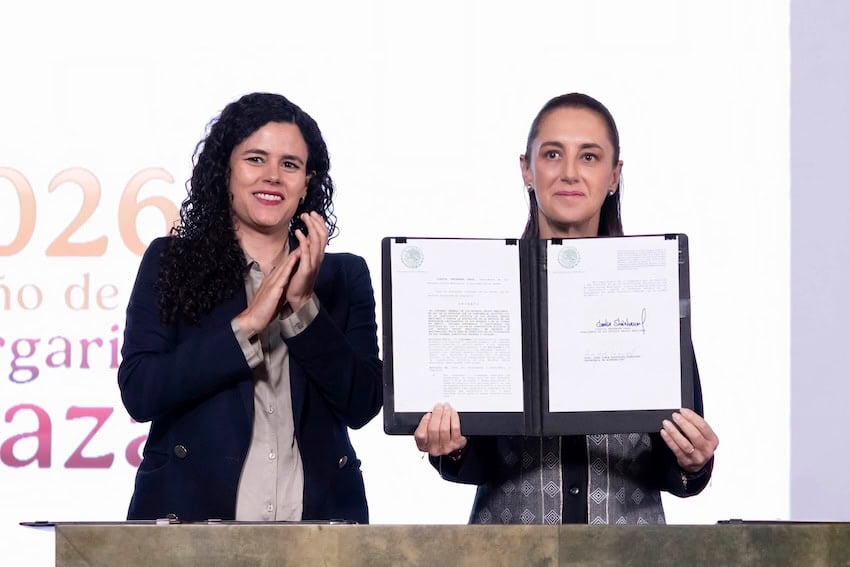
Mexico’s President Claudia Sheinbaum signed a decree on Wednesday formalizing a constitutional reform that bars individuals holding dual citizenship from becoming president, governor, or mayor of Mexico City. The change, which takes effect in 2028, has ignited a heated debate about national loyalty, security risks, and potential discrimination.
A Question of Allegiance
Supporters of the reform argue that leaders must have undivided loyalty to Mexico. Sheinbaum herself stated, “Presidents of Mexico can only have one flag, one homeland, one people to defend.” This sentiment resonates with concerns about foreign influence, particularly from the United States, where some Mexican politicians hold dual citizenship.
Security Concerns and Historical Context
Proponents point to examples like Colombia and Ecuador, where leaders with ties to the U.S. have been accused of prioritizing foreign interests. One commenter noted, “Dual citizens are sadly a security risk. The Russian invasion of Ukraine highlighted the risk of dual citizens in positions of power.”
However, critics counter that loyalty cannot be legislated. “Split allegiances is nothing more than a racist dogwhistle,” argued one person with dual Mexican-U.S. citizenship. “I’ve always lived in Mexico. I’m 100% Mexican, so I can’t hold office just because my mom was born in Texas?”
Practical Implications and Criticisms
The reform requires aspiring candidates to renounce any foreign citizenship. While some see this as a reasonable safeguard, others call it discriminatory, particularly for those with dual citizenship by birth or family heritage. “It seems cruel to strip someone of their heritage/identity,” commented one person.
Political motivations are also questioned. The reform could potentially block Ricardo Salinas Pliego, a prominent opposition figure with dual Mexican-U.S. citizenship, from running for president in 2030. Critics accuse the ruling Morena party of using the reform to eliminate political rivals.
International Comparisons
Mexico’s move contrasts with countries like the U.K., where non-citizens can become Prime Minister. However, other nations have similar restrictions. In the U.S., while not legally required, high-ranking officials traditionally renounce dual citizenship.
The Road Ahead
As Mexico navigates this controversial reform, the debate continues. Is it a necessary protection against foreign influence, or an unnecessary restriction on qualified candidates? The answer may lie in how the law is implemented and whether it truly strengthens Mexico’s sovereignty without unfairly targeting its diverse citizenry.

